Electric car consumption and real-world range: let's do the maths
Created by Tiago Fernandes at Thursday, 22 October 2026
When it comes to petrol and diesel cars, most of us have a point of reference. When a car consumes 4 or 5 litres per 100 kilometres, we know that's a fairly economical figure. But what about an electric car? How many kWh/100 km are considered good consumption?
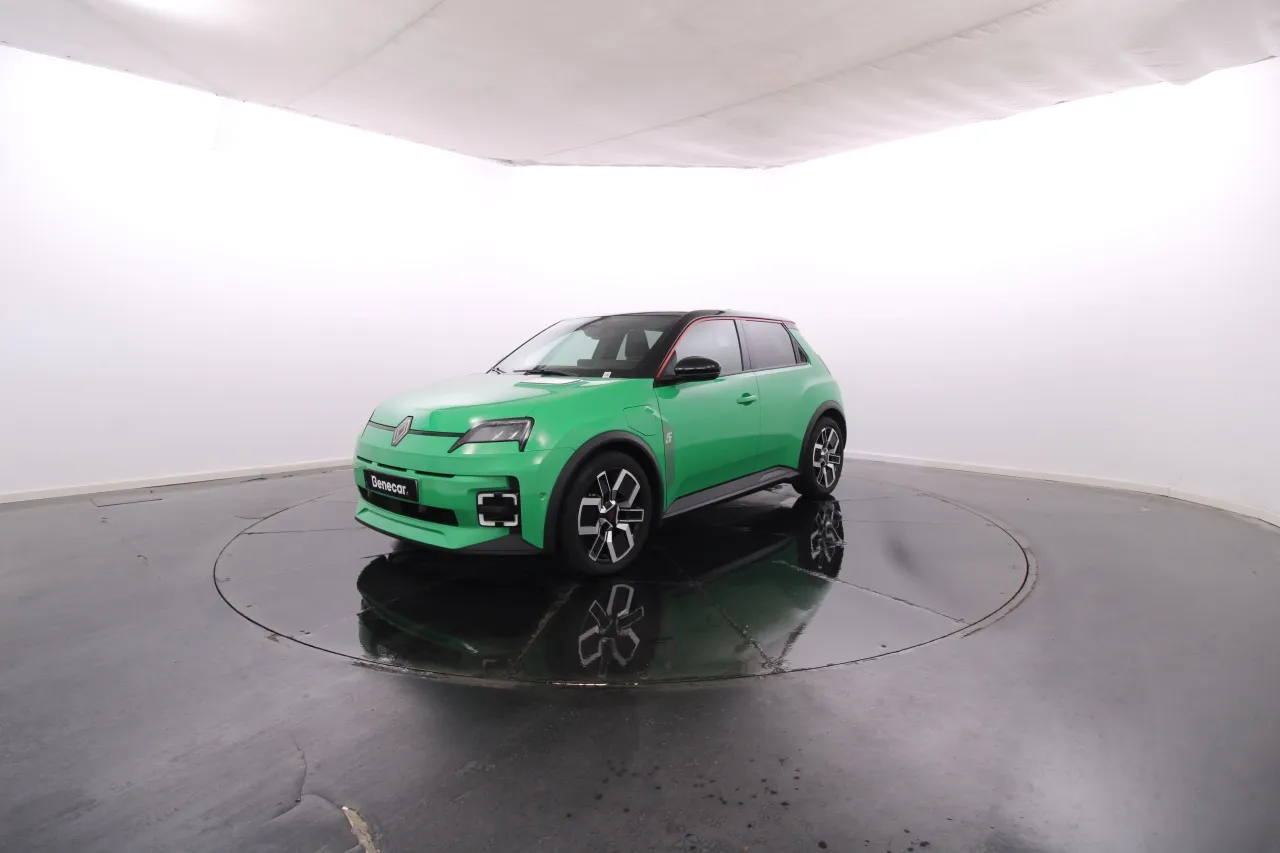
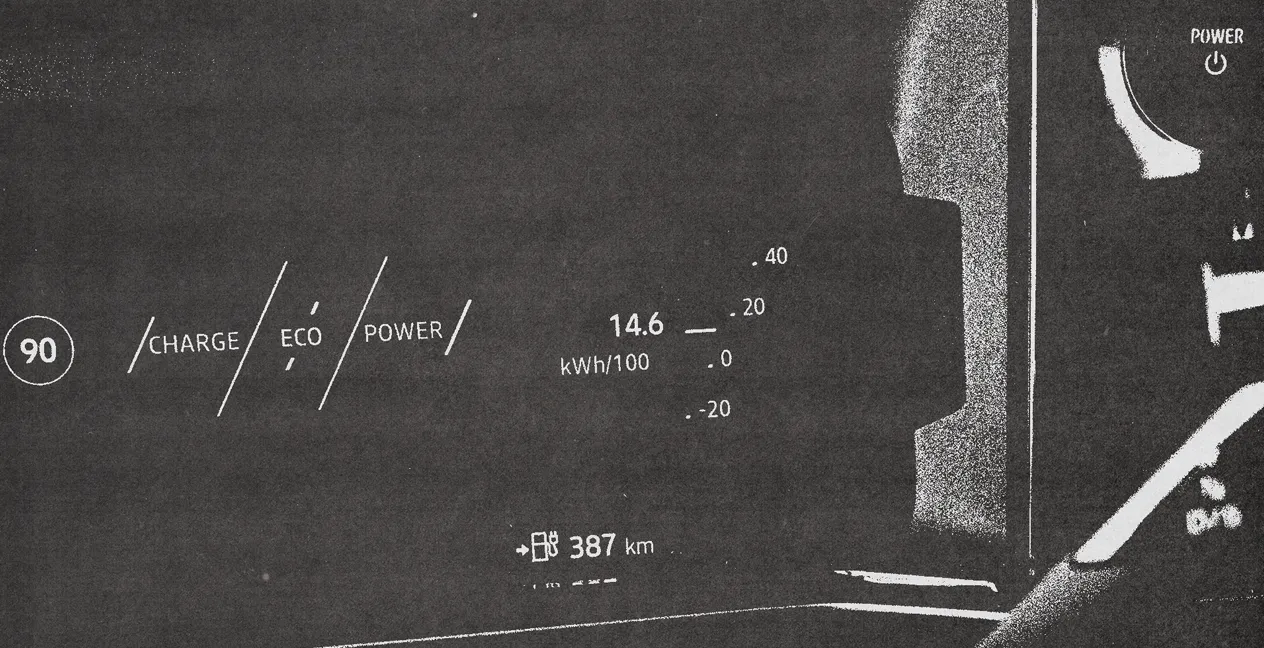
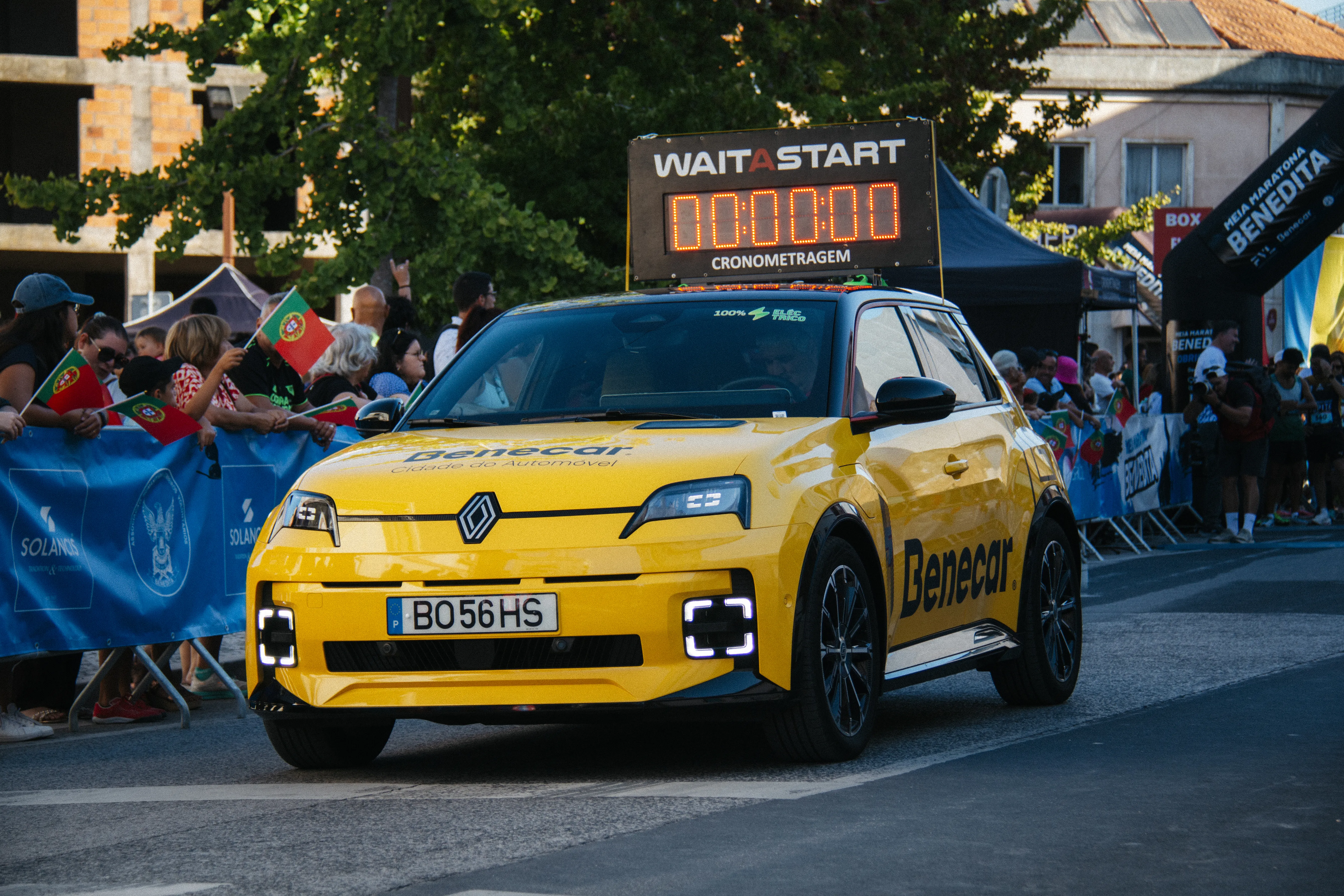
This question came to mind while I was driving the electric Renault 5 we use as a company car at Benecar, equipped with a 52 kWh battery. I tend to keep an eye on instantaneous and average consumption figures on the dashboard, trying to understand how speed, the route and driving style affect the results.
That day, I noticed that the average consumption was 14.9 kWh/100 km. It seemed like a reasonable figure, but was it actually good? And knowing that this Renault 5 has a 52 kWh battery, how many kilometres could I travel while maintaining that average?
That's when I started doing the maths. And I realised that, although the calculations are relatively simple, there are a few important details that make all the difference.
What is considered good consumption for an electric
car?
Unlike petrol and diesel cars, which measure fuel consumption in litres per 100 kilometres, electric cars use kilowatt-hours per 100 kilometres, expressed as kWh/100 km.
A consumption figure of 15 kWh/100 km means that the car uses an average of 15 kWh of energy stored in its battery to travel 100 kilometres.
Just as with conventional fuels, the lower the consumption, the greater the vehicle's energy efficiency.
However, there is no universal figure that can be considered good for every electric car. A small city car does not have the same energy requirements as a large SUV, which is heavier and has greater aerodynamic drag.
As a general guideline, consumption between 12 and 15 kWh/100 km can be considered very efficient for many passenger cars. Figures between 15 and 18 kWh/100 km are still good, while consumption between 18 and 22 kWh/100 km can be perfectly normal for larger vehicles or those frequently driven on motorways.
These ranges are not an official classification. They simply help put the figures into perspective, as the type of vehicle and driving conditions make a significant difference.
For a specific reference, the German automobile club ADAC recorded consumption of 17.3 kWh/100 km in its test of the Renault 5 E-Tech electric with a 52 kWh battery, including energy losses during charging.
This suggests that the 14.9 kWh/100 km I observed on the dashboard is a positive result for this model. However, we cannot directly compare the two figures because they were obtained using different measurement methods.
How do you calculate the estimated range of an electric car?
After understanding what the consumption figure meant, another question came to mind: how many kilometres can I travel on a fully charged battery?
The formula is simple: Estimated range = usable battery capacity ÷ average consumption × 100
Imagine an electric car with a usable battery capacity of 50 kWh and an average consumption of 10 kWh/100 km.
Dividing 50 by 10 and multiplying by 100 gives us a theoretical range of 500 kilometres.
However, there are two important points to consider. Firstly, 10 kWh/100 km is a very low consumption figure, which we should not assume is normal under all driving conditions. Secondly, this calculation assumes that the entire usable battery capacity is consumed.
Let's return to the Renault 5. Renault offers versions with usable battery capacities of 40 kWh and 52 kWh. Maintaining a consumption figure of 14.9 kWh/100 km, we can calculate different scenarios:
Battery usage | 40 kWh battery | 52 kWh battery |
|---|---|---|
From 100% to 0% | 268 km | 349 km |
From 100% to 10% | 242 km | 314 km |
From 80% to 20% | 161 km | 209 km |
These results are mathematical estimates, rounded to the nearest kilometre, rather than ranges measured during an actual journey.
The difference is significant. In a Renault 5 with a 52 kWh battery, maintaining that consumption would theoretically allow us to travel around 349 kilometres using the entire usable battery capacity. However, if we want to finish the journey with 10% battery remaining, the available range drops to approximately 314 kilometres.
On the other hand, regularly using the battery between 20% and 80% means having just 60% of its usable capacity available during each cycle of use.
This does not mean that the battery must always be kept within that range. Recommendations vary depending on the manufacturer, battery technology and intended use. On a long journey, for example, it may make sense to start with the battery charged to 100%, while following the manufacturer's guidelines.
There is another important distinction: a battery's total or gross capacity does not always correspond to the usable capacity available to the driver. Some manufacturers reserve part of that energy to protect and manage the battery. Therefore, when making these calculations, we should always look for the model's usable battery capacity.
Why does electric car range vary so much between city and motorway driving?
One of the characteristics of electric cars is that they can achieve particularly low consumption figures in urban environments and considerably higher figures on motorways.
The main explanation is speed. As we accelerate, air resistance increases and, consequently, more energy is required to keep the vehicle moving.
At 120 km/h, a vehicle must overcome significantly greater aerodynamic resistance than it does at 50 km/h.
City driving also offers another advantage: regenerative braking. When we slow down, the electric motor can recover some of the vehicle's kinetic energy and return it to the battery. On motorways, where we often travel at constant speeds, there are fewer opportunities for this energy recovery.
However, it is important to understand that regenerative braking does not generate free energy or recover all the energy previously used. It is primarily a way of reducing the losses that would otherwise occur during conventional braking.
In ADAC's test of the Renault 5 with a 52 kWh battery, consumption in urban conditions was around 12.5 kWh/100 km, rising to approximately 21 kWh/100 km on motorways, including the charging losses considered by the organisation.
Besides speed, outside temperature, climate control, terrain, wind, tyres and the weight being carried also affect range.
This is why the range advertised by manufacturers under the WLTP cycle should be understood as a homologation figure obtained under standardised conditions. It is useful for comparing vehicles, but it does not guarantee the number of kilometres we will be able to travel on any given journey.
So, is 14.9 kWh/100 km a good consumption figure for the Renault 5?
Yes, it is a good figure, particularly if achieved under mixed driving conditions. Even so, an average recorded during a particular journey is not enough to establish a vehicle's typical consumption.
Ideally, consumption should be monitored over several hundred kilometres, including city, road and motorway driving, under different conditions.
There is one final detail we should not overlook. The consumption figures displayed by the onboard computer do not necessarily include energy losses during charging. In other words, to replenish 15 kWh in the battery, we may need to draw more than 15 kWh from the electricity grid.
This difference does not change the range calculated from the battery's usable energy, but it does affect how much we actually pay to travel 100 kilometres.
Ultimately, understanding electric car consumption is not very different from understanding fuel consumption in a petrol or diesel car. We simply need to get used to a new unit of measurement and recognise that, just as with litres of fuel, the figures vary depending on the vehicle and how we drive it.
From there, calculating the estimated range becomes relatively straightforward. The real challenge is determining whether that range suits our usual journeys and needs.
And that matters far more than simply looking at the figure advertised in the vehicle's technical specifications.
Explore the electric cars available at Benecar