
Created by Daniela Ezequiel at Thursday, 11 June 2026
Mazda believes that combustion engines have a future
Electrification has been pointed to as one of the most important paths to reducing emissions in the automotive sector, but Mazda continues to argue that the future may involve several solutions at the same time. The latest proof of this is the development of the Mazda Mobile Carbon Capture system, an experimental technology capable of capturing carbon dioxide directly from exhaust gases while the car is in motion.
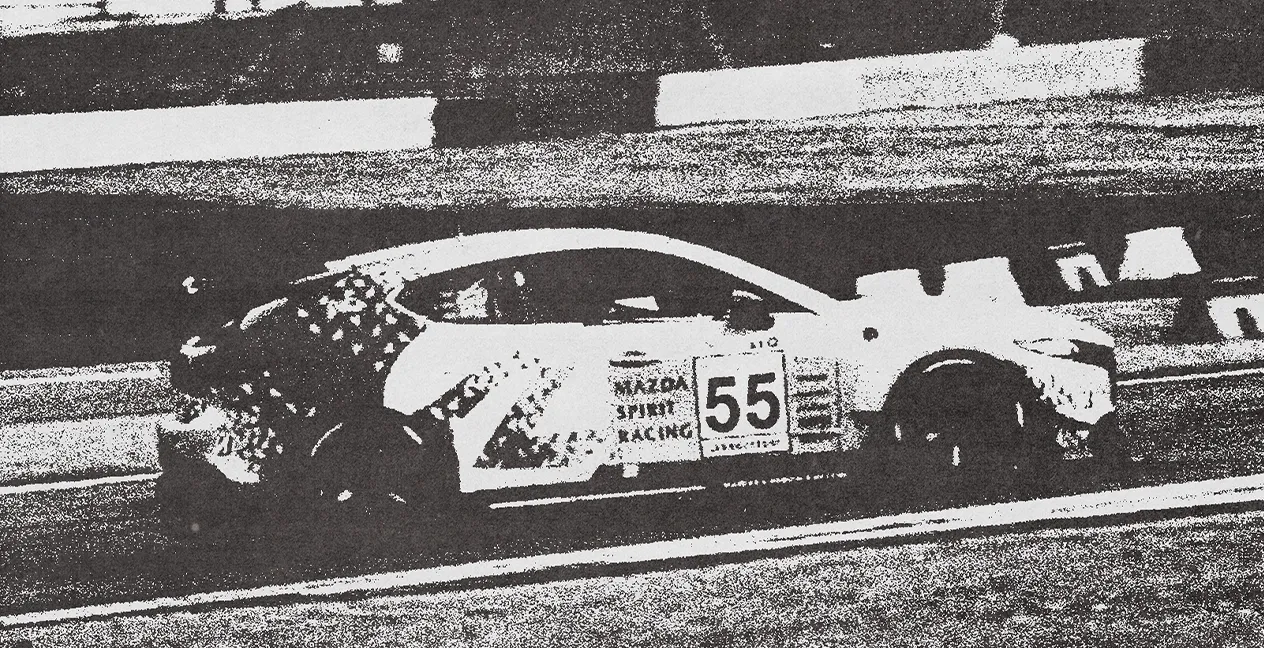
The idea may seem like something out of a futuristic scenario, but the Japanese brand is already testing it under real and highly demanding conditions. During the third round of the Super Taikyu Series 2026, held at the Fuji circuit, Mazda once again put this technology to the test in a competition prototype, the MAZDA SPIRIT RACING 3 Future Concept.
The result was promising: the system managed to capture and store 804 grams of CO₂ over the course of a 24-hour race. This figure represents an improvement of around 9.6 times compared to the first trial, carried out in November 2025, when 84 grams of carbon dioxide had been captured.
How Mazda’s CO₂ capture works
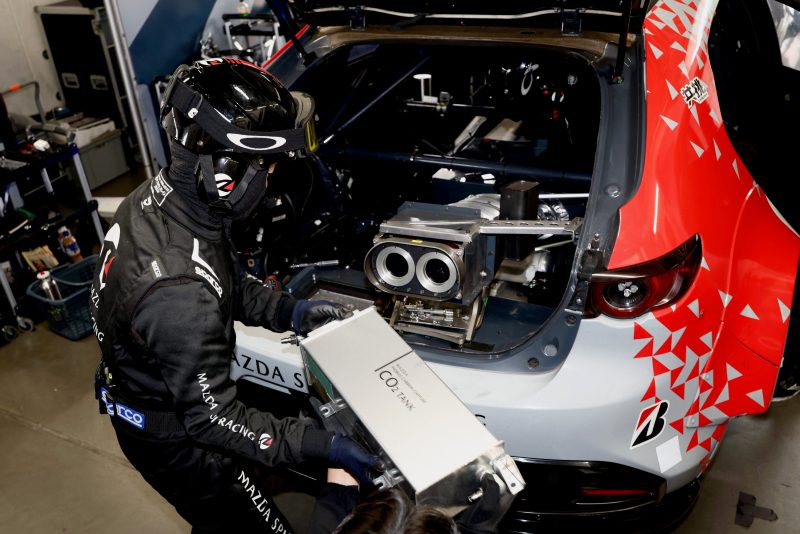
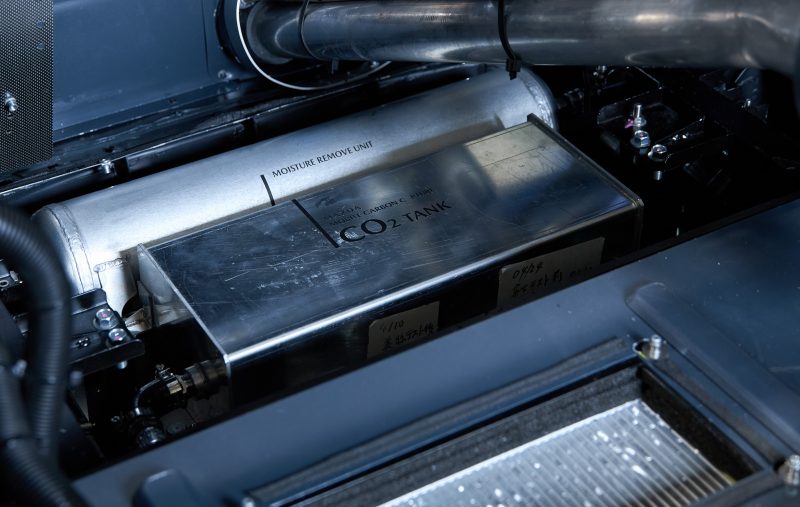
The Mazda Mobile Carbon Capture system uses a zeolite, a material with a porous structure capable of absorbing the carbon dioxide produced by the engine. Once captured, the CO₂ is released through the heat generated by the exhaust gases, compressed by an electric compressor, and stored in a tank installed in the vehicle itself.
Simply put, the process works almost like a sponge: first it absorbs the carbon dioxide, then it releases it in a controlled way, and finally stores it in a reservoir, preventing it from being released directly into the atmosphere.
This new testing phase was particularly important because, for the first time, Mazda demonstrated the complete functioning of the system. In other words, it was not just about capturing CO₂, but also about releasing it from the absorbent material and storing it in the vehicle.
Another relevant detail is that the prototype used was powered by Hydrotreated Vegetable Oil, also known as HVO. This alternative fuel can significantly reduce CO₂ emissions over its life cycle when compared to conventional fossil fuels.
By combining HVO with onboard carbon capture, Mazda managed to achieve emission reduction levels higher than those initially expected for future production vehicles. Even so, it is important to stress that these results were obtained under very specific racing conditions.
An alternative to electrification?
The technology is still in an experimental phase and is far from reaching mass production. Mazda itself acknowledges that a complete emissions balance over the entire life cycle of the system has not yet been established, something essential to understand its true environmental impact.
Even so, the tests show that there may be room for solutions complementary to electrification. Rather than betting on just one direction, Mazda continues to explore different paths to reduce the environmental footprint of cars, including alternative fuels, more efficient engines, and systems capable of capturing emissions.
The next step is to continue testing this technology under even more demanding conditions. The brand intends to evaluate the system again during the seventh round of the Super Taikyu Series, scheduled for November, while also continuing development in collaboration with various industrial partners.
Presented for the first time at the Japan Mobility Show, the Mazda Mobile Carbon Capture project is part of the brand’s strategy to achieve carbon neutrality by 2035. For now, it is not a ready solution for road cars, but it shows that the combustion engine may still have room to evolve in a future increasingly focused on reducing emissions.
Sources: Razão Automóvel, Sapo