
Created by Daniela Ezequiel at Wednesday, 29 April 2026
Clio and Twingo lead Renault’s strategy for 2026
Renault is preparing to enter 2026 with two very strong names at the center of its strategy: Clio and Twingo. Two models well known to the European public, but with very different missions in this new phase of the French brand.
On one side is the new Renault Clio, one of the most important models in Renault’s history and also one of the most popular cars in Portugal and Europe. On the other, the return of the Renault Twingo, now 100% electric, with a proposal designed to make electric mobility more accessible, practical, and urban.
In an increasingly competitive market, shaped by electrification and the need to reduce consumption and emissions, Renault is betting on familiar names to strengthen its position. The strategy seems clear: evolve without losing the emotional connection that many drivers still have with these models.
New Renault Clio 2026: more modern, hybrid, and without Diesel
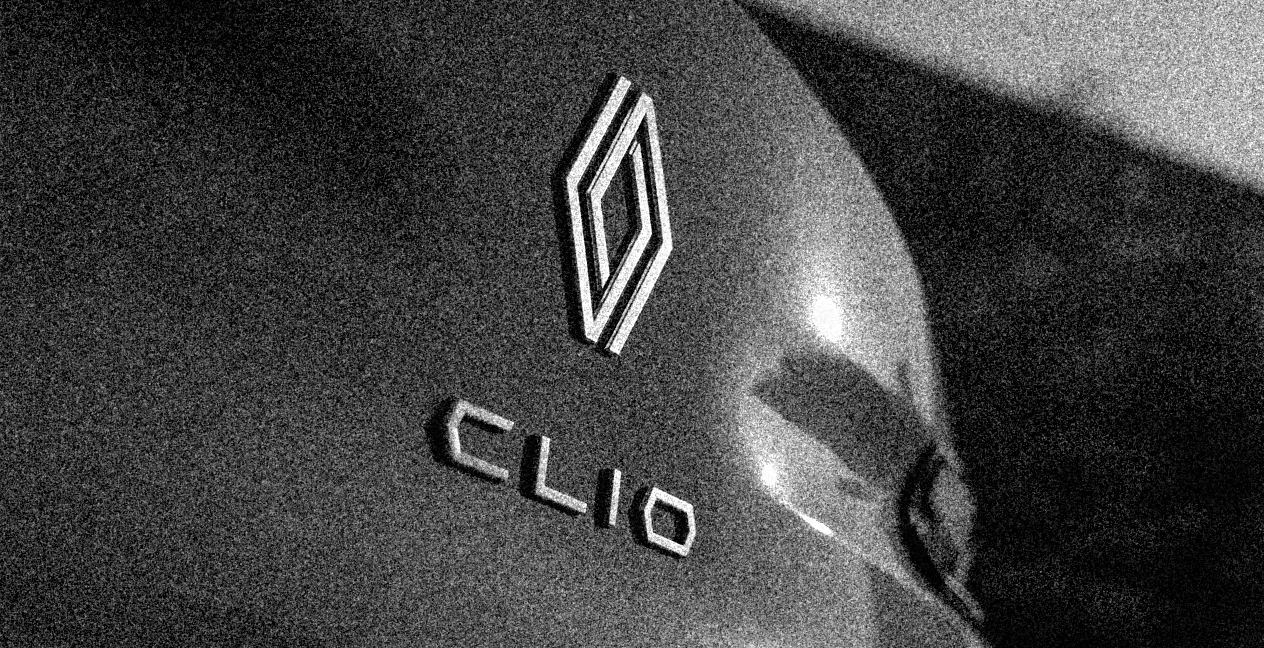
The new Renault Clio 2026 represents the sixth generation of a model that already has more than three decades of history. In this new phase, the French hatchback appears with a completely renewed image, more dynamic and aligned with Renault’s new visual identity.
The front end has been redesigned, with a more striking grille, LED light signature, and a larger logo. The silhouette has gained a more modern profile, with coupé-inspired styling, concealed rear door handles, and a more sculpted rear end, reinforcing the model’s younger and more technological positioning.
One of the major changes is the absence of Diesel powertrains. Instead, Renault is now focusing on petrol, hybrid, and LPG solutions. The most relevant version is the Renault Clio E-Tech Full Hybrid, with 160 hp, capable of driving up to 80% of the time in electric mode in the city and reaching up to 1,000 km of range, without the need for external charging.
This powertrain combines a 1.8-litre petrol engine with two electric motors and a 1.4 kWh battery. According to the published data, average consumption is around 3.9 to 4.3 l/100 km, depending on the version and source, with emissions starting from 89 g/km of CO₂.
Inside, the new Clio also focuses on technology. The OpenR Link system with Google built in, the dual 10.1-inch screens, customizable ambient lighting in 48 shades, and higher-quality materials help reinforce the feeling of evolution compared to the previous generation.
The boot, with capacity of up to 391 litres, is another strong point, especially for those looking for a versatile city car for daily use, but with enough space for trips or family use.
Renault Twingo E-Tech Electric: the return of a historic name
If the Clio represents the continuity of a success story, the Renault Twingo E-Tech Electric symbolizes the return of a charismatic model, now adapted to the new reality of electric mobility.
Inspired by the original Twingo, the new model recovers the fun, compact, and practical image that marked several generations of drivers. The difference is that, this time, it appears as a 100% electric proposal, designed for the city and for those looking for a simple, efficient, and affordable car.
Renault wants to position the new electric Twingo as one of its most economical options within the electric range. In Portugal, prices are expected to start below 20,000 euros, while another source points to figures around 21,097 euros, depending on the version and commercial framework.
The model uses the AmpR Small platform, the same base as the Renault 5 E-Tech, but with a simpler configuration. It features a 60 kW electric motor, equivalent to 82 hp, 175 Nm of torque, and a 27.5 kWh battery. The announced range is between 261 and 263 km in the combined WLTP cycle.
Despite its compact dimensions, the Twingo promises a good degree of versatility. The sliding rear seats allow the cargo space to be increased to 360 litres, an interesting figure for a city car and very close to the capacity announced for the Clio.
This proposal could be especially relevant for families looking for a second car, young drivers, or urban users who make short daily journeys and value easy parking, low running costs, and electric driving.
Megane E-Tech Electric is also preparing new features
Although Clio and Twingo are the main protagonists, Renault is also preparing an update for the Megane E-Tech Electric.
The compact electric model had a challenging year in 2025, with a significant drop in sales, and the French brand is expected to respond with a deeper update than usual. Among the expected new features are new batteries, with one of the options exceeding the 60 kWh of the current version, and a possible sportier repositioning.
There are also rumors about a high-performance version, in an approach that could recover part of the spirit associated with the old Renault Sport models. If confirmed, this change could help the Megane E-Tech Electric gain new momentum in an increasingly competitive segment.
A strategy based on familiar names
Renault’s bet for 2026 shows an interesting strategy: recover and strengthen names with strong recognition in the market, while adapting them to the new demands of drivers.
The Clio continues to be an essential piece for sales volume, now with a more technological, efficient proposal and without Diesel. The Twingo returns as an affordable electric car, with a clear urban vocation. The Megane E-Tech Electric, meanwhile, is looking to reposition itself to become competitive again among compact electric family cars.
More than launching completely unfamiliar models, Renault is betting on the strength of names that are already part of European automotive memory. In 2026, Clio and Twingo will have the responsibility of showing that tradition and electrification can go hand in hand.
Sources: Razão Automóvel, Caetano, Guia do Automóvel, attached document.