
Created by Daniela Ezequiel at Thursday, 30 April 2026
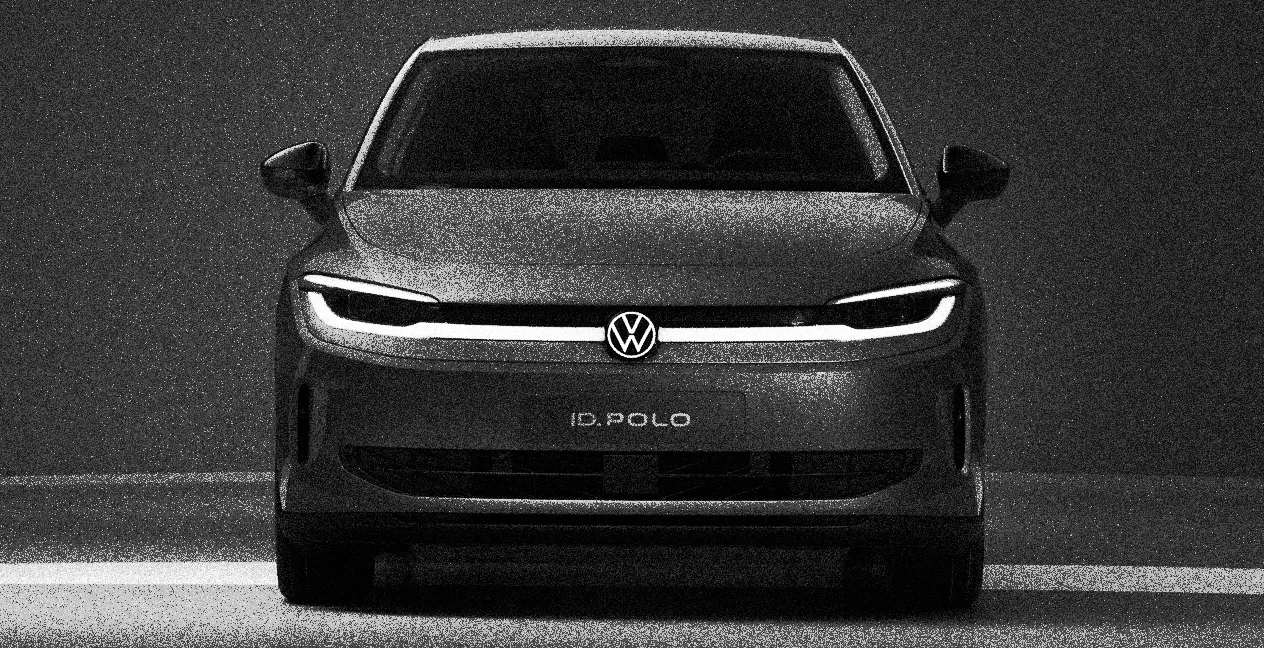
New Volkswagen ID.Polo: compact EV linking past and future
The Volkswagen Polo is preparing to enter a new phase in its history. After more than 20 million units sold since the launch of the original model in 1975, the German compact now appears in a 100% electric version: the new Volkswagen ID. Polo.
More than just a simple engine change, this new model represents a bridge between Volkswagen’s past and future. On the one hand, it brings back a historic and very familiar name for several generations of drivers. On the other, it relies on an electric platform, a new design language, and usability tailored to modern everyday life.
Volkswagen itself is changing the way it identifies its electric models. Instead of relying only on numbers within the ID. family, the brand is once again giving value to familiar names, bringing its new electric cars closer to the models that were part of its history.
An electric Polo inspired by the past
The new Volkswagen ID. Polo adopts the Pure Positive design language, created to convey a simple, clear image that is closer to the brand’s classic models. The result is a compact car with balanced lines, a friendlier front end, and several details that refer back to Volkswagen’s DNA.
One of the clearest examples is in the rear pillar, inspired by the original Golf from the 1970s. The rear also features a light strip running across the full width of the body, while the rear window visually extends to the pillars, helping to reinforce the model’s presence.
In terms of dimensions, the ID. Polo measures 4053 mm in length, 1816 mm in width, and 1530 mm in height. Although it is slightly shorter than the combustion-engined Polo, it is wider, taller, and has a wheelbase 50 mm longer, which should benefit interior space, especially for those travelling in the back.
Another important point is aerodynamics. With a drag coefficient of 0.26, the new Volkswagen ID. Polo was designed to help improve efficiency and, naturally, electric range.
The return of physical buttons
Inside, Volkswagen seems to have listened to some of the criticism aimed at the first models in the ID. family. The new ID. Polo focuses on simpler and more familiar usability, bringing back physical controls for important functions.
Climate controls are no longer concentrated on touch-sensitive sliding surfaces and are now operated through a strip of physical buttons. The radio volume also returns to a rotary knob, a simple, practical, and more intuitive solution for everyday use.
The brand is also bringing back the four buttons to control the windows of all four doors, abandoning the solution of just two buttons alternating between the front and rear windows. It may seem like a small detail, but it is precisely this kind of decision that shows a concern for making the car easier to use.
On board, there is also a 10-inch digital instrument cluster, a 13-inch central infotainment screen, and a retro view inspired by the graphics of the original Volkswagen Golf. Depending on the trim level, the ID. Polo may include wireless smartphone charging, wireless Apple CarPlay and Android Auto, LED Matrix headlights, heated seats, and dual-zone air conditioning.
The boot is another major highlight. With 441 litres of capacity, the new Volkswagen ID. Polo clearly surpasses the combustion-engined Polo and even the Volkswagen Golf, which belongs to a higher segment. For a compact electric car, this is a highly relevant argument for small families, daily commuting, and weekend trips.
Up to around 455 km of range
The new Volkswagen ID. Polo uses the latest generation of the MEB+ platform and is expected to be available with two batteries. The first has 37 kWh, with LFP chemistry, and may be paired with electric motors of 85 kW, equivalent to 116 hp, or 99 kW, equivalent to 135 hp. In this configuration, the announced range can reach 329 km.
The more powerful versions feature a 52 kWh battery with NMC chemistry. The 155 kW version, equivalent to 211 hp, is expected to be the most efficient in terms of range, with figures of up to around 455 km. The future GTI variant is expected to have 166 kW, that is, 226 hp.
In charging, the ID. Polo supports up to 105 kW in direct current in the versions with the larger battery, allowing energy to be recovered from 10% to 80% in around 27 minutes, according to data available in the specialist press. Volkswagen also mentions fast charging up to 105 kW DC, with approximate times of 24 minutes, depending on the version and charging conditions.
All Volkswagen ID. Polo models are expected to come with Vehicle-to-Load technology as standard, allowing the battery’s energy to be used to power external equipment. It is a feature that is increasingly valued in electric models, especially because of the versatility it offers on trips, during leisure activities, or in occasional situations of need.
In dynamic terms, Volkswagen promises balanced driving. The new ID. Polo features independent McPherson front suspension and a new torsion bar on the rear axle. Another new feature is braking, with solid discs instead of the drums used in some of the first ID. models.
A compact electric car with family ambitions
The new Volkswagen ID. Polo wants to be more than just an electric alternative to the traditional Polo. The proposal seems clear: to offer a compact, easy-to-use car, with good range, plenty of space for the segment, and an emotional connection to the brand’s past.
Production will be handled by the SEAT S.A. factory in Martorell, Spain, alongside the CUPRA Raval, another important model in the Volkswagen Group’s new electric offensive.
Its arrival on the market still does not have a fully defined date, but it should happen before the GTI variant. Prices have also not yet been officially confirmed, although the specialist press points to figures starting at around 25 thousand euros.
In a market where compact electric cars are becoming increasingly important, the new Volkswagen ID. Polo could play a decisive role. It combines a familiar name, a 100% electric proposal, more practical interior solutions, and enough range to meet both daily commutes and longer trips.
At its core, the ID. Polo wants to do what the Polo has always done well: be a compact, rational, and accessible car. Only now, prepared for a new era.
Sources: Razão Automóvel; Volkswagen