
Modified cars: what's changing with the new rules and fines?
Created by Tiago Fernandes at Wednesday, 18 November 2026
Does your car have modifications to its engine, exhaust system or suspension? The rules for modifying vehicles in Portugal have changed, bringing new responsibilities for owners and workshops, including situations that could result in fines.
Decree-Law No. 184/2026, published on 16 September and effective from 15 November 2026, introduced the new Vehicle Modification Regulation. The legislation establishes rules for approving vehicle modifications, strengthens safety and environmental protection requirements, and prohibits certain alterations to anti-pollution systems.
But can a remapped car still be driven legally? Do you need a special inspection after modifying your vehicle? And what happens if the police discover modifications that have not been approved?
The answer depends on the type of modification and whether the vehicle complies with the applicable regulations.
Which car modifications are prohibited under the new law?
One of the most important provisions is Article 8 of the new regulation, which establishes restrictions on modifications to emission control systems.
The legislation prohibits removing, altering or preventing these systems from functioning normally when doing so leads to an increase in pollutant emissions.
This provision may cover components such as diesel particulate filters (DPF), catalytic converters, exhaust gas recirculation (EGR) valves and AdBlue systems. However, these components are not individually identified in the legal text.
For example, removing a diesel particulate filter or electronically disabling an emission control system in a way that increases pollution falls within this prohibition. However, repairing or replacing a faulty component with a compliant alternative remains permitted.
And what about ECU remapping, commonly known as remapping or chiptuning?
The decree-law does not impose a blanket ban on all engine remapping. However, modifications that change the engine's approved specifications or affect the vehicle's technical requirements are subject to the applicable approval procedures. If remapping involves disabling anti-pollution systems and increasing emissions, it may directly violate Article 8.
The legislation also covers modifications to components such as transmissions, suspension, steering, brakes, bodywork and lighting systems. This means that installing different suspension components, modifying the braking system or changing engine components may require approval from the Portuguese Institute for Mobility and Transport (IMT).
This does not mean that all these modifications are prohibited. It means that they must comply with the applicable technical requirements and, where necessary, obtain the relevant approval.
What changes for inspections of modified cars?
This is one of the most important questions for drivers.
Article 19 of the new regulation establishes the technical inspection requirements applicable to vehicles following a modification.
When a modification requires an inspection, it will be necessary to verify that the work has been carried out correctly and that the vehicle continues to meet the appropriate safety and environmental protection standards.
If everything complies with the requirements, an approval certificate is issued. This certificate may be digital and is valid for 90 days. This period refers to the certificate used in the approval procedure, not to the validity of the vehicle's regular mandatory roadworthiness inspection.
If irregularities are detected, the owner receives a report identifying the non-compliances and must submit the vehicle for another inspection.
The decree-law also provides for these inspections to be carried out at the IMT or at Category B vehicle inspection centres, with the associated costs covered by the vehicle owner.
There is also an important rule for drivers who need to take a modified vehicle to an inspection or technical test. When this procedure is mandatory, Article 20 allows the vehicle to be driven for that purpose on the scheduled day, without passengers or cargo, provided that the driver carries proof of the appointment.
However, one point needs to be clarified: the decree-law does not introduce a new mandatory periodic inspection for all modified cars, nor does it require every vehicle to undergo additional emissions testing during its regular inspection.
Whether an inspection is required following a particular modification depends on the specific procedures established in the regulation and its supplementary legislation.
Who checks vehicle modifications, and what are the fines?
The changes to the legislation also strengthen the regulatory framework for inspections and the responsibilities of those carrying out vehicle modifications.
The IMT is responsible for approving vehicle modifications and has powers to monitor compliance with the new regulation.
The Portuguese Food and Economic Safety Authority (ASAE) supervises, within its powers, the sale of components covered by the legal prohibitions. The Directorate-General for Consumer Affairs is responsible for certain enforcement activities relating to prohibited advertising.
And what about the PSP and GNR, Portugal's police forces?
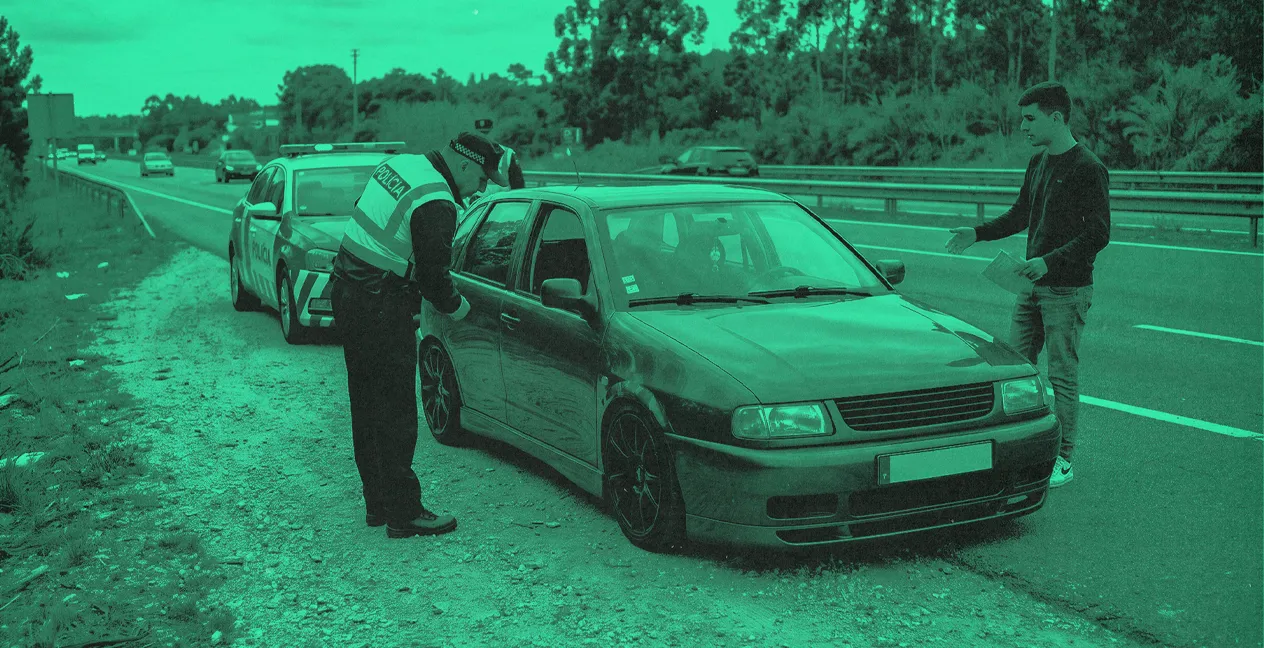
The new decree-law does not establish a specific new roadside enforcement procedure for these authorities. The inspection of vehicles on public roads continues to be governed by the Portuguese Highway Code and other applicable legislation.
Therefore, it would be incorrect to conclude, based solely on this decree-law, that police officers must now perform new mandatory tests on ECU remapping, particulate filters or electronic control units during roadside checks.
Regarding fines, Article 23 classifies several violations of the regulation as serious economic administrative offences.
These include carrying out modifications that breach environmental or approval requirements, submitting false statements during approval procedures, manipulating technical test results, and engaging in prohibited sales or advertising.
The decree-law does not directly specify the amounts of the fines in euros. Instead, it refers to the Legal Framework for Economic Administrative Offences, approved by Decree-Law No. 9/2021, to determine the applicable penalties.
As a result, there is no single fine that applies to every type of vehicle modification. The consequences depend on the offence, the party responsible and the applicable legal framework.
Workshops and companies recognised as vehicle modifiers also have specific obligations concerning technical documentation, compliance, liability insurance and the correction of any identified irregularities.
Vehicle owners also retain responsibilities when carrying out or commissioning individual modifications. Choosing a professional workshop does not remove the obligation to comply with the relevant approval requirements.
Is advertising illegal car modifications also prohibited?
Yes, and this is another significant change.
Decree-Law No. 184/2026 amends Article 22-A of the Portuguese Advertising Code, prohibiting the promotion of modifications that violate Article 8 of the new regulation.
In practice, advertising services involving the removal of particulate filters, the deactivation of anti-pollution systems or the installation of prohibited components may constitute an offence when those advertisements promote interventions covered by the legal restrictions.
The reference to advertising in any form means that the restriction is not limited to traditional advertisements. It may also apply to promotional communications on websites, social media and other platforms.
It is important to distinguish this from commercial advertising displayed on vehicles themselves. The decree-law does not introduce a general ban on placing logos, vehicle wraps or advertisements on cars. The restriction concerns the promotion of modification practices that violate the rules identified in the legislation.
For workshops specialising in vehicle tuning and modifications, this means that checking whether a modification can legally be performed is no longer the only consideration. They must also ensure that the services they advertise comply with the applicable regulations.
How can you legally approve modifications to your car?
The new regulation establishes two types of approval: individual modification approval, which applies to a specific vehicle, and general modification approval, which may cover several vehicles of the same make and model.
For an individual modification, the application is submitted by the vehicle owner or their representative. General modification approval must be requested by an entity officially recognised as a vehicle modifier.
Depending on the proposed modification, the process may require a technical project, compliance reports, assessments by competent authorities and specific inspections.
Once the modification has been completed, the owner must submit the necessary documentation to the IMT to regularise the vehicle's status. If information recorded on the vehicle registration certificate (Documento Único Automóvel, or DUA) has changed, the document must be replaced, at no additional cost to the applicant under Article 22.
The legislation also provides for supplementary regulations to establish the specific procedures applicable to each type of modification. Until these new provisions come into force, previous rules that do not conflict with the new regulation will continue to apply.
Therefore, before modifying a vehicle, the safest approach is to check with the IMT whether the proposed work requires prior approval, which documents are needed and whether an inspection will be mandatory afterwards.
The purpose of the new legal framework is to allow vehicles to be modified without compromising the road safety and environmental protection standards established during their original approval.
For drivers, the main conclusion is simple: modifying a car is not necessarily illegal, but any changes must comply with the applicable technical requirements and approval procedures. When it comes to anti-pollution systems, removing or disabling components in a way that increases emissions is expressly prohibited.