Created by Lucas Luís at Thursday, 29 January 2026
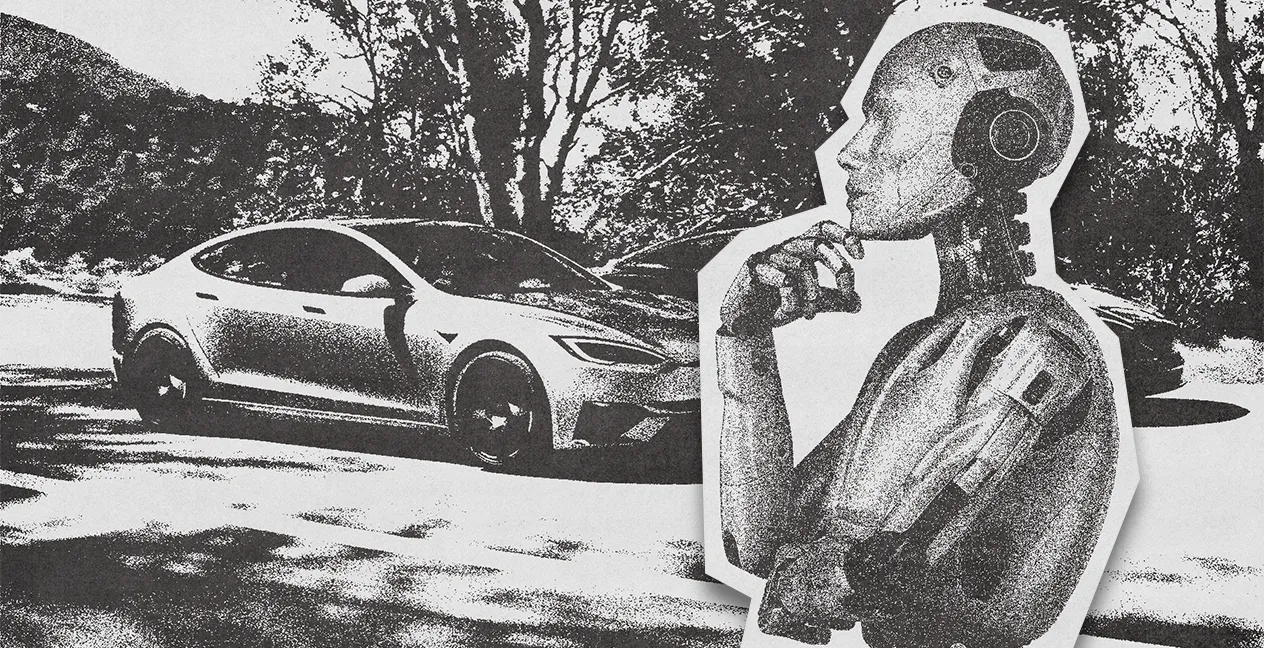
Tesla "kills" the Model S and X to give life to robots
The decision has been made and marks the end of an era. Tesla will discontinue the Model S and Model X by the end of the second quarter of 2026, closing the chapter on the two models that helped build the brand’s image in the premium electric segment. The announcement was made by Elon Musk during the presentation of the company’s fourth-quarter 2025 financial results and has a very clear reason: freeing up industrial capacity for the company’s future beyond the automotive world.
Launched in 2012, the Model S was the first car fully developed by Tesla and proved that an electric vehicle could be fast, desirable, and technologically advanced. The Model X arrived in 2015, with its unmistakable “falcon wing” doors, reinforcing that image in the SUV segment. Together, these two models were instrumental in financing the development of the Model 3 and Model Y and in forcing the traditional industry to take electric cars seriously.
In recent years, however, reality has changed. Sales of the Model S and Model X have entered a steep downward trajectory. Since 2023, Tesla has stopped disclosing individual figures, grouping them under the category “other models.” Estimates point to a drop of more than 30% year on year, with global deliveries below 50,000 units in 2024 and figures that, in 2025, are expected to be around just 30,000 units.
This decline has made it increasingly difficult to justify maintaining an aging, low-volume platform. The Fremont factory in California has the capacity to produce around 100,000 units per year of the Model S and X, but has long been operating well below that limit, with high industrial costs and little margin for significant technical evolution.
In June 2025, Tesla still tried to extend the life of the two models with a discreet update, featuring a new color, front camera, ambient lighting, and a slight increase in range. The changes were accompanied by a price increase of $5,000, placing the Model S at $84,990 and the Model X at $89,990. Even so, important structural changes were left out, such as the 48-volt architecture or more advanced electronic steering systems, reinforcing the perception that investment in these models was no longer a priority.
Meanwhile, the competition moved ahead. The Lucid Air surpassed the Model S in range and performance, and the Rivian R1S established itself as a more modern alternative to the Model X. Tesla itself focused its efforts on higher-volume, more profitable models such as the Model 3 and Model Y, leaving its former flagships in an increasingly secondary role.
This is where the robots come in. The production line freed up in Fremont will be adapted to manufacture Optimus, the humanoid robot that Musk considers strategic to the company’s future. The bet is clear: replacing the production of low-volume cars with infrastructure dedicated to large-scale robotics, in an attempt to convince investors that Tesla’s next big business is not limited to mobility, but also includes automation and robotic “labor.”
The farewell to the Model S and X does not erase their legacy. These were the cars that showed the world that electric vehicles could be aspirational, fast, and desirable. But the decision confirms a profound shift in Tesla’s strategy, with less focus on its automotive past and eyes set on a technological future where robots play a central role.
Sources: Turbo.pt and Público