
Created by Lucas Luís at Thursday, 12 February 2026
Imported used cars set records: ACAP reveals reform plan
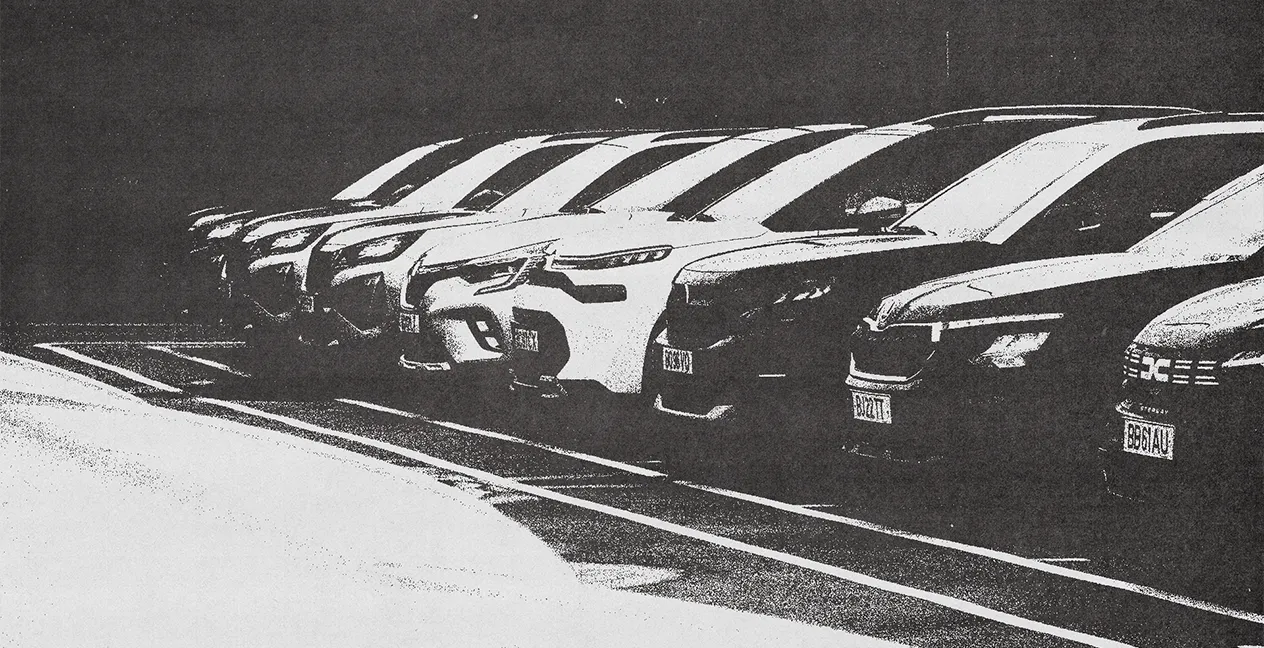
The Portuguese automotive market has once again been at the center of debate. In 2025, 120,787 used vehicles were imported, a new all-time record. This number represents 53.7% of the total new cars registered in Portugal, a figure that is raising concern within the sector.
But the most worrying data is another: the average age of these vehicles is 7.9 years. For the Portuguese Automobile Association (ACAP), this scenario contributes to the aging of the national vehicle fleet and may compromise environmental and road safety objectives.
In this context, ACAP presented five structural measures to reform the automotive sector and accelerate the energy transition. One year after the initial proposal, the association provided an update.
1. Curbing the impact of imported used cars
ACAP’s main concern is the massive influx of used vehicles from other European Union countries.
The proposal is that these vehicles must be mandatorily registered in SIRER — the Integrated Electronic Waste Registration System, through the Portuguese Environment Agency, thus ensuring communication with management entities and the payment of the respective environmental contributions.
According to the association, the measure is awaiting coordination between the IMT and the Tax Authority in order to be implemented and enforced.
2. More control over particulate filters
Another proposal concerns vehicles circulating without a particulate filter, a situation that has a direct impact on pollutant emissions.
ACAP has argued that inspection centers should be equipped with particle number counters. According to information communicated to the association, this equipment is already in the implementation phase in technical inspection centers.
3. Plug-in hybrid tax benefits at risk?
With the entry into force of the Euro 6e-bis standard, the method for calculating CO₂ emissions of plug-in hybrids has changed. The certification test increased from 800 km to 2,200 km and the electric utility factor was revised, reflecting conditions closer to real-world use. In practice, many models began to show higher CO₂ values.
In Portugal, this could mean the loss of tax benefits, such as the 75% discount on ISV.
To avoid distortions in the market, the Government adjusted the emissions limit for light passenger plug-in hybrids registered under the Euro 6e-bis standard, increasing it from 50 g/km to 80 g/km.
4. Online platform for recalls
At the end of 2025, the Recall online platform was launched, developed in partnership with the IMT and with the support of the Directorate-General for Consumers.
The tool allows owners to check whether their vehicle is subject to any recall action for safety or emissions reasons. Portugal has one of the lowest recall campaign execution rates in Europe, raising concerns regarding road safety.
5. Reduction of autonomous taxation
Autonomous taxation applied to companies on vehicle-related expenses is also under discussion.
Although a gradual reduction until 2028 had been proposed, in 2025 the decrease was only 0.5%, and in the 2026 State Budget the rates remained unchanged. ACAP argues that the next State Budget should implement a 10% reduction in autonomous taxation rates.
The automotive sector is clearly at a moment of redefinition. Between record imports of used cars, tax changes, and new environmental rules, the decisions made in the coming months could have a direct impact on price, supply, and the renewal of the vehicle fleet in Portugal.
If you are thinking about changing your car, keeping up with these changes can make all the difference.
Source: Razão Automóvel