
SEAT’s future after 2030 remains uncertain within Volkswagen
Created by Daniela Ezequiel at Tuesday, 8 September 2026
SEAT could cease to exist as a brand after 2030. The possibility has already been officially acknowledged by SEAT S.A. itself, although the company stresses that no final decision has yet been made regarding the future of the historic Spanish brand.
The possibility arises at a time of profound transformation within the Volkswagen Group, marked by electrification, the need to reduce costs and a reorganisation of the strategy across the group’s various brands. In SEAT’s case, the company acknowledges that continuing to invest in a new generation of models has become increasingly difficult to justify.
Among the main challenges are increasingly demanding regulations, the high costs associated with electrification and the investment required to develop new cars. As a result, several scenarios for the period after 2030 are currently being analysed, including the possible gradual discontinuation of the SEAT brand.
It is important, however, to make a distinction. One thing is the future of the SEAT brand. Another is the future of SEAT S.A., the company that includes SEAT itself, CUPRA and an important industrial component within the Volkswagen Group.
SEAT will continue to launch new products in the coming years
Despite the uncertainty surrounding its future after 2030, the plans already established for SEAT remain in place.
The brand is expected to maintain the launches and updates planned for the coming years, including new 48 V mild-hybrid powertrains for the SEAT Ibiza and SEAT Arona, scheduled to arrive in 2027.
SEAT S.A. itself also guarantees that, regardless of the decision eventually taken, it will continue to support existing customers through its dealer network and fulfil the commitments already made.
Initial reports about a possible end of SEAT pointed to the brand disappearing by 2029. That timeline, reported by the German press, has not been confirmed by the company. Officially, the different scenarios under consideration concern the period after 2030.
In other words, there is currently no defined date for the end of SEAT, nor even confirmation that this will ultimately be the path chosen.
CUPRA becomes increasingly important within the group
If SEAT’s future remains uncertain, the same does not appear to apply to CUPRA.
Created as an independent brand in 2018, CUPRA has progressively become one of the most important parts of SEAT S.A.’s strategy and is currently described by the company itself as its main growth driver.
Since its launch, CUPRA has already delivered more than one million cars and introduced eight models in eight years. By 2030, the brand aims to achieve a 3% market share in Europe and continue expanding its international presence.
Entry into the Middle East is planned for the third quarter of 2027 and, in the long term, the ambition to enter the United States market also remains.
This development helps explain why the future of the two brands may follow different paths. While CUPRA continues to grow and strengthen its positioning, SEAT faces greater difficulties in justifying new investment for a future generation of models.
At the same time, SEAT S.A. intends to continue playing an important role within the Volkswagen Group, particularly through the Martorell factory in Spain.
The company is involved in the industrialisation of the platform intended for the group’s new family of urban electric cars and aims to further strengthen activity at the Spanish facility. The investment in the electrification of Spain announced in 2022 by the Volkswagen Group, SEAT S.A. and the partners of the Future: Fast Forward project amounts to €10 billion.
The future of SEAT as a brand is therefore far from decided. Regulation, consumer demand, development costs and automotive market conditions will be decisive factors in the decision to be made over the coming years.
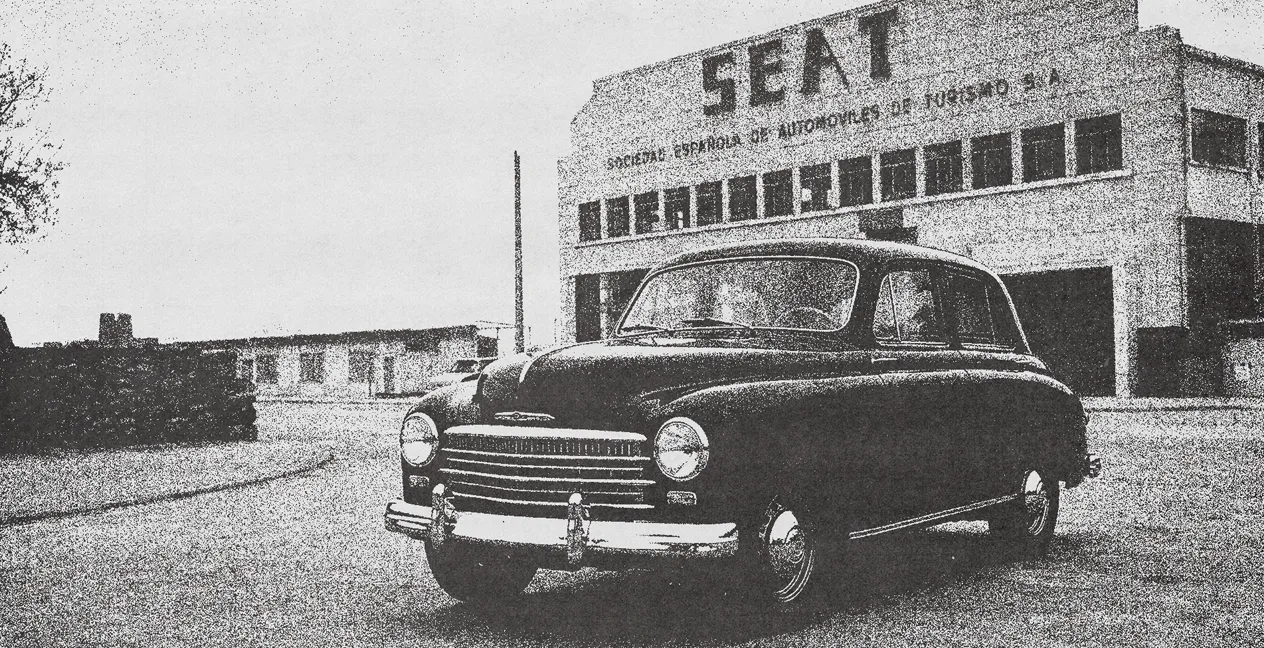
What is certain is that any eventual farewell would carry enormous historical significance. SEAT has been part of the Spanish automotive industry for more than seven decades, and models such as the Ibiza have become true symbols of the brand across several generations.
Until then, SEAT remains on the road. What happens after 2030 remains, for now, one of the major uncertainties within the Volkswagen Group.
Sources: Guia do Automóvel, Razão Automóvel, SIC Notícias