
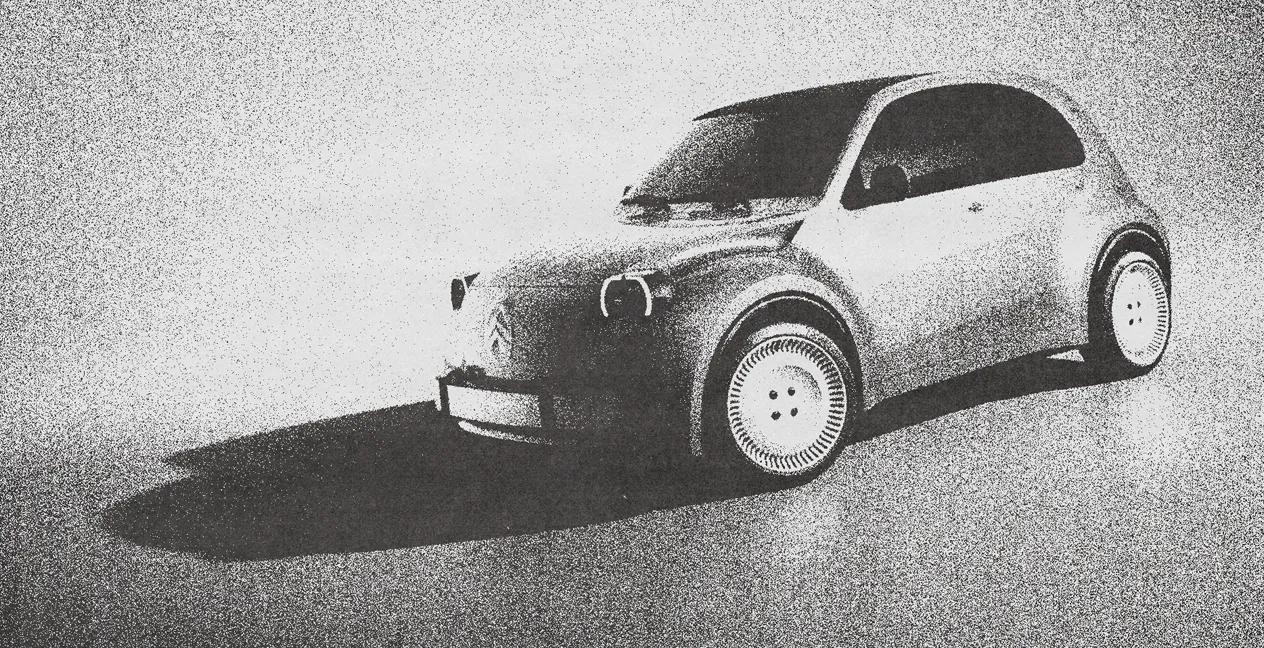
Citroën 2CV is back: electric version revives historic icon
Created by Daniela Ezequiel at Monday, 19 October 2026
The legendary Citroën 2CV is back, this time with a new identity and a 100% electric powertrain. The French brand unveiled the Citroën 2 CV Concept at the Paris Motor Show, a prototype that revives the spirit of one of the most iconic cars in history and adapts it to the demands of modern mobility.
With a design that combines nostalgia and modernity, the new electric Citroën 2CV could reach the market in 2028, with an entry price of around €15,000. The brand’s intention is clear: to once again offer a simple, functional and affordable car, just as it did with the original model.
New electric Citroën 2CV retains the essence of the original
First presented in 1948, the Citroën 2CV became a true symbol of the French automotive industry. Designed to be economical, robust and easy to use, it won over several generations of drivers and remained in production until 1990.
Now, Citroën intends to revive that philosophy in a fully electric car designed to meet urban mobility needs and environmental challenges.
The new prototype measures 3.76 metres in length, slightly less than the 3.85 metres of the original model, and is expected to weigh close to 1,000 kg. Within the brand’s range, it will be positioned between the small Citroën Ami and the Citroën C3.
Visually, several elements refer back to the past. The distinctive round headlights, vertical windscreen, curved roof and rounded wheel arches have been reinterpreted with a contemporary design language.
The 18-inch steel wheels and tyres developed in collaboration with Michelin reinforce this connection between tradition and innovation.
As for the technical specifications, Citroën has not yet revealed information about the electric motor’s power, battery capacity, range or charging times.
An interior full of creativity and references to the past
While the exterior revives the identity of the original Citroën 2CV, the cabin combines simplicity, technology and unexpected solutions.
The conventional instrument panel gives way to a cylindrical structure, accompanied by a single-spoke steering wheel. Information is displayed through the Citroën Smart Vision system and an eight-inch touchscreen.
But it is the small details that make this prototype particularly interesting.
The new Citroën 2CV includes a removable basket in place of the centre console, a portable radio that can be taken out of the car and even a removable front seat. The fabric roof allows the vehicle to be transformed into a kind of convertible, reviving one of the most appreciated features of the historic model.
There are also a few surprises for those who look closely. The accelerator pedal features the design of a hare, while the brake displays a tortoise. The door compartments were designed to carry eggs, in tribute to the original project, one of whose objectives was to transport a basket of eggs over uneven terrain without breaking them.
Three numbers with a special meaning also appear on the windscreen: 48, 90 and 26. They represent the years 1948, when the 2CV was born, 1990, when production ended, and 2026, the year the new concept was presented.
Citroën 2CV has a special connection to Portugal
The return of this model also has particular significance for Portugal.
The last Citroën 2CV produced in the world left the Mangualde factory on July 27, 1990. It was a unit from the special Charleston series, marking the end of more than four decades of history.
Over more than two decades, the Portuguese factory produced 81,882 Citroën 2CV units, including commercial versions.
This connection to the Portuguese automotive industry has not been forgotten in the new prototype, which includes subtle references to the most important moments in the model’s history.
In total, more than five million 2CV units were produced, making it one of Citroën’s most recognisable cars.
A comeback that took 16 months to design
Reinventing such an iconic model was not a simple task.
Development of the Citroën 2 CV Concept took around 16 months and involved several design proposals before the final version was chosen.
Xavier Chardon, head of Citroën, rejected the first proposals and approved only the third version presented by the design team led by Gilles Vidal.
The entire creative process is documented in La légende revient, available on Prime Video from October 16, 2026.
The film reveals the first sketches, meetings between those responsible for the project and some of the decisions that made it possible to transform a historic car into a proposal for the future.
Citroën also presented the 2 CV Fourgonnette Concept, a modern interpretation of the model’s former commercial version. However, for now, this proposal is only a design exercise, with no announced plans for production.
When will the new electric Citroën 2CV arrive?
A production version is expected to arrive in 2028, with an indicative price of approximately €15,000.
The brand intends to manufacture the car in Europe and develop a solution aligned with future European rules for small electric vehicles.
However, it is important to note that the announced price is not yet final and that the main technical specifications remain undisclosed.
More than simply reviving a historic name, Citroën is seeking to bring back a philosophy that defined several generations: affordable, practical cars designed to make drivers’ lives easier.
If the project does indeed reach production with these characteristics, the new Citroën 2CV could once again play an important role in democratising mobility, this time electric.
Sources: SAPO, Jornal de Notícias, Notícias ao Minuto