
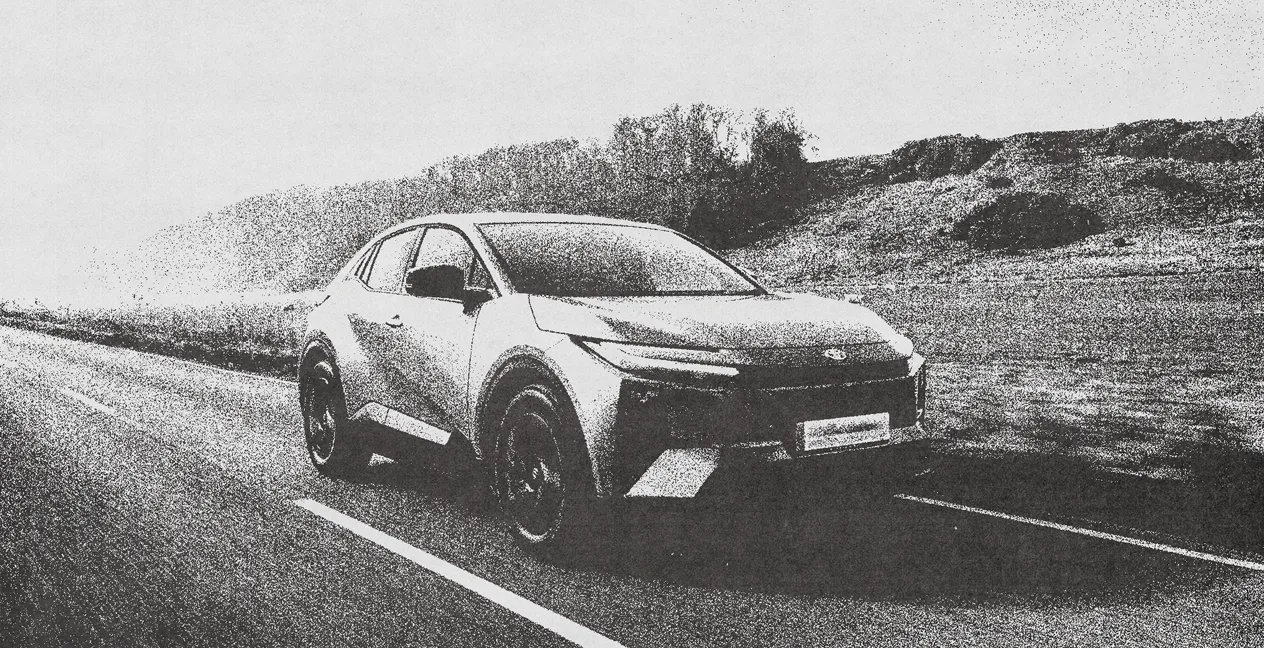
Toyota announces new hybrid engine with 15% lower fuel consumption
Created by Daniela Ezequiel at Monday, 2 November 2026
Toyota is developing a new generation of hybrid engines that promises to make its cars even more efficient. The main new feature is a 1.5-litre four-cylinder engine, designed from the ground up for electrification, which could deliver an improvement of more than 15% in fuel economy.
But the innovation goes beyond fuel consumption. The Japanese brand is also preparing a new platform that will allow hybrid, plug-in hybrid and 100% electric cars to be developed from a common architecture.
The technology was presented on October 28, 2026 and forms part of Toyota’s strategy to reduce emissions and respond to the different needs of drivers.
New Toyota hybrid engine focuses on efficiency and lower fuel consumption
Toyota’s new powertrain has a 1.5-litre four-cylinder petrol engine at its core, which will be available in two versions: naturally aspirated and turbocharged.
Unlike other solutions that adapt existing engines to hybrid technology, Toyota developed this new system from the outset with electrification in mind.
This means that the combustion engine, electric motors and electronic components have been designed to work together as an integrated system, making better use of the available energy.
The result is a smaller, lighter and more efficient hybrid system capable of delivering performance similar to that of larger-displacement engines.
According to Toyota, the naturally aspirated version of the new engine was developed to cover the performance range currently provided by the brand’s 1.8-litre hybrid engine and 1.5-litre three-cylinder engine.
But how will it be possible to reduce fuel consumption by more than 15%?
The answer lies in a combination of several technical improvements. The new hybrid generation focuses on reducing mechanical friction, more efficient engine temperature management and lower electrical energy losses.
In addition, Toyota is developing silicon carbide electronic components, which improve the efficiency of energy conversion and management.
The aerodynamics of future cars will also play an important role, helping to reduce air resistance and, consequently, fuel consumption.
The improvement of more than 15% is, for now, a development target announced by Toyota, meaning the final results will depend on the characteristics of the models that use this technology.
One platform for hybrid, plug-in and electric cars
Another major new development is the creation of a multi-technology platform, designed to allow different types of powertrain to share the same architecture.
In practice, Toyota intends to use a common base to develop 100% electric vehicles, conventional hybrids and plug-in hybrids without compromising interior space, design or vehicle capabilities.
This approach represents an important advantage for the brand, as it allows production to be adapted to demand in each market.
For example, in a country where hybrid cars remain in high demand, Toyota will be able to adjust production accordingly. In markets with greater demand for 100% electric vehicles, the same architecture will make it possible to prioritise that technology.
The smaller dimensions of the new hybrid system will also have an impact on the appearance of future models.
With a more compact and lower-profile engine, it will be possible to develop cars with lower bonnets and more dynamic proportions, giving design teams greater freedom.
At the same time, sharing platforms and components could reduce development and production costs by taking advantage of economies of scale across different powertrains.
Toyota remains committed to hybrids and sustainable mobility
Despite the growth of 100% electric cars, Toyota continues to believe that hybrids play an important role in the transition towards lower-emission mobility.
The brand’s strategy is to offer different electrification solutions rather than concentrating all its efforts on a single technology.
It is in this context that the new 1.5-litre hybrid engine has been developed, also with compatibility with renewable and carbon-neutral fuels in mind.
Toyota also intends to expand external sales of its engines and hybrid technologies over the coming years, seeking to increase the use of these solutions.
At the same time, it will continue to invest in fully electric cars and hydrogen fuel-cell technologies.
With this new generation of engines, the Japanese brand aims to demonstrate that there is still room to improve the efficiency of hybrid systems by combining more compact combustion engines with increasingly advanced electrical components.
For drivers, this development could result in hybrid cars with lower fuel consumption, greater energy efficiency and new design possibilities.
Although Toyota has not yet announced which models will debut this powertrain or their respective launch dates, the project represents another step forward in the evolution of the brand’s hybrid technology.
Sources: Toyota, Notícias ao Minuto, Revista Carros